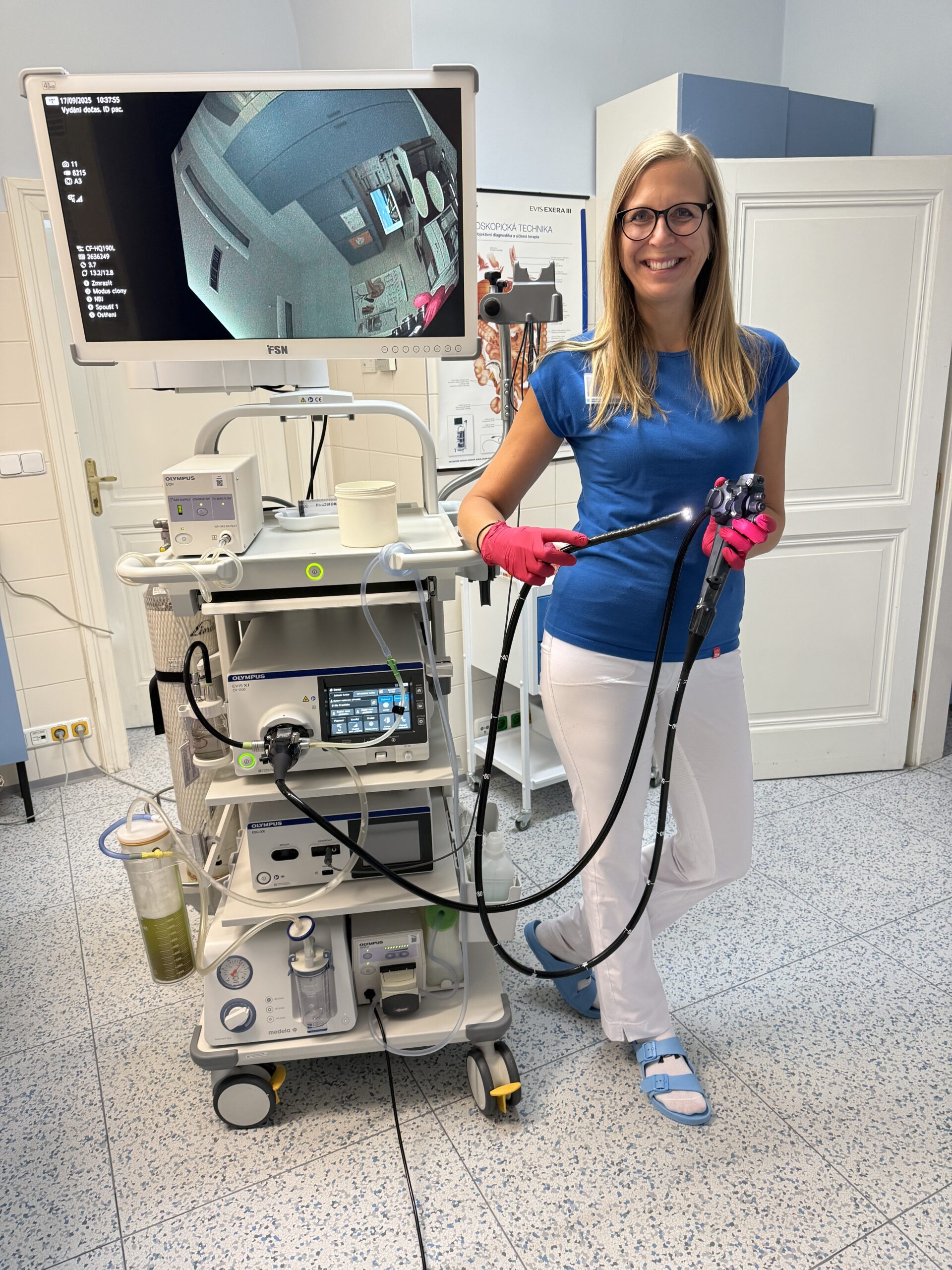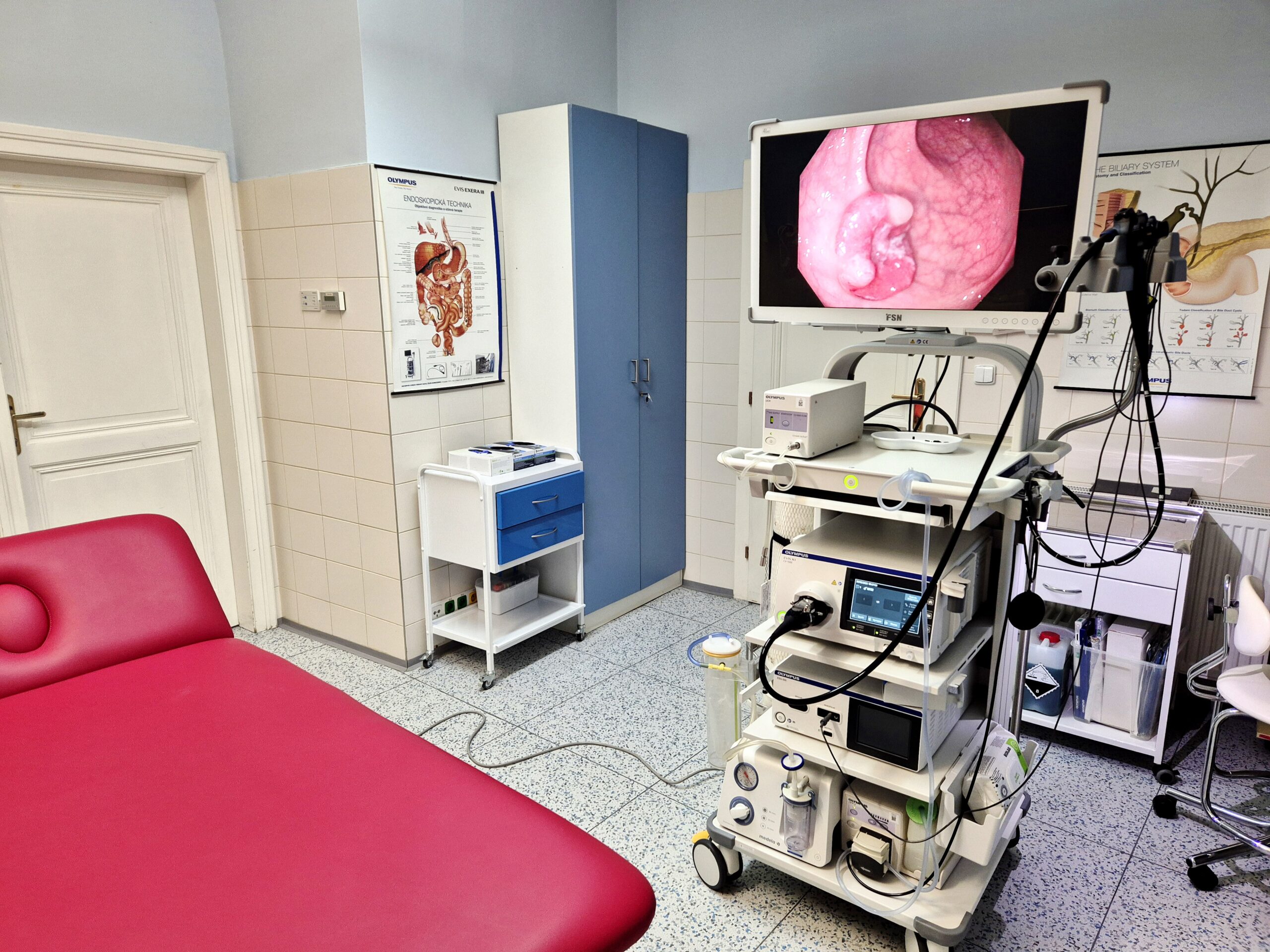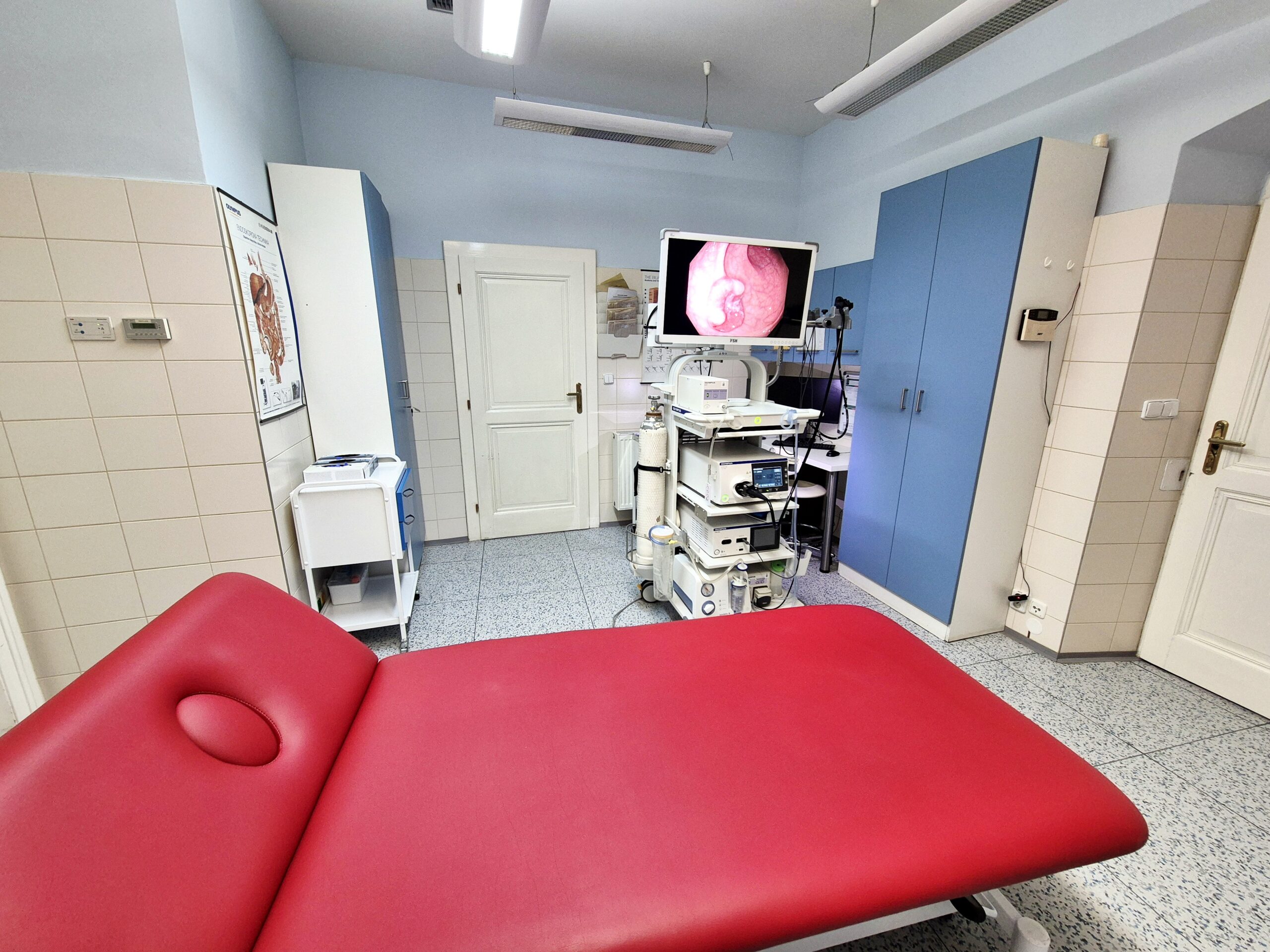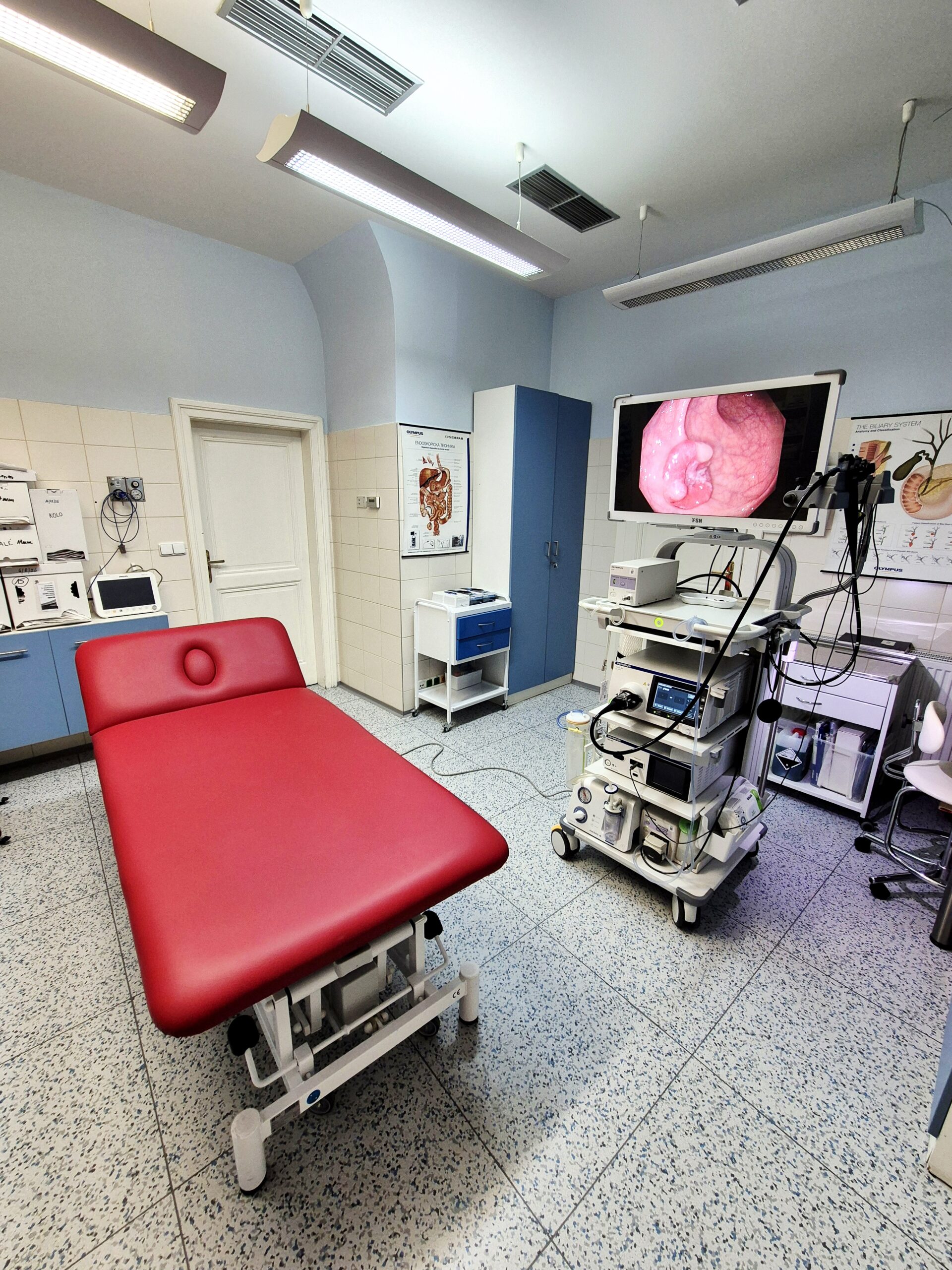
The Gastroenterology Department at Na Františku Hospital specializes in the diagnosis and treatment of digestive system disorders. It is one of the official screening centers participating in the national colorectal cancer screening program.
At this state-of-the-art facility, we perform comprehensive diagnostic endoscopic examinations of the upper and lower gastrointestinal tracts, as well as a full range of therapeutic endoscopic procedures, such as polypectomy, hemostasis (including sclerotherapy), and the fragmentation and removal of gallstones.
We also provide long-term follow-up care for patients with cancer and other serious diseases of the digestive tract. We also care for patients who have undergone digestive tract surgery.
Range of endoscopic procedures
Upper gastrointestinal endoscopy– examination of the esophagus, stomach, and duodenum, including biopsy, polypectomy, hemostasis, and removal of foreign bodies
Colonoscopy– an examination of the large intestine and terminal ileum (the final section of the small intestine), including the option of biopsy, polypectomy, endoscopic mucosal resection, and hemostasis
Endoscopic retrograde cholangiopancreatography(ERCP) – a diagnostic and therapeutic procedure for diseases of the biliary tract and pancreas, combining endoscopy and X-ray imaging
Endoscopic examinations may be performed under general anesthesia in appropriate cases.
Colorectal Cancer Screening Center
Our gastroenterology department has beendesignated a screening center underthe colorectal cancer screening program bythe Czech Ministry of Health.
You can undergo a preventive colonoscopy coveredby public health insurance at our clinic evenwithout a referral fromyour primary care physician. Simply make an appointment with us directly. The exam is fully coveredforboth men and womenaged 50 and olderonce every 10 years.
What our patients say about us
Dear Dr. Stefanová,
I would like to take this opportunity to warmly thank you for the care you provided during my examination.
Dr. Burian told me that you are very skilled. I am glad that I was able to experience your skill firsthand. You have a grateful “patient” in me, although I hope I won’t need your care very often.
Wishing you all the best,
“Mr. Honza,” Kladno
Thank you so much for making my colonoscopy on Monday possible. It was my fifth one, and I’ve had a variety of “experiences” with previous ones. I prepared thoroughly and with a bit of fear—wondering what would happen and how it would go—but all my worries vanished instantly when I saw the smile of the receptionist and the kind doctor. I have never experienced such a wonderful atmosphere anywhere else. Completely painless!!! Once again, a HUGE THANK YOU!
Hana B.
Today, September 29, 2025, I had an appointment for a colonoscopy at 7:20 a.m. I would like to take this opportunity to thank everyone who was involved in this procedure. They were very kind, helpful, professional, and patient with someone like me who suffers from white coat syndrome. I truly appreciate people like that.
Miratina V.
Today I was at your hospital for a colonoscopy. The entire process—from preparation to the exam and my time in the recovery room—was exceptional. In my opinion, the smiling, positive doctors and nurses deserve at least a word of praise. I felt very comfortable and at ease. I know, what I’m about to say might sound a bit strange.
But everything was so good that I’m actually looking forward to my next exam in a few years.
Jan P.
I would like to thank Dr. Stefanová and the nurses who assisted with my examination yesterday. The procedure, the first of its kind for me, went absolutely smoothly from my perspective and without any further symptoms. Thank you for your kind and professional care.
Tibor B.
Today, July 10, I underwent a colonoscopy at the Gastroenterology Department—everything went perfectly. From the nurse (who was incredibly kind) to the doctor. Thank you very much.
Pavol K.
Why shouldn't you be afraid of a colonoscopy?
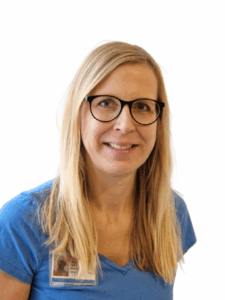
A colonoscopy is often associated with fear and anxiety. In reality, however, thanks to modern techniques, it is a much less invasive procedure than most people think. Dr. Magdalena Stefanová, PhD, the head physician of our gastroenterology clinic, explains why you don’t need to be afraid of a colonoscopy—and how it can help you stay healthy.
When and how often should people undergo screening for colorectal cancer?
Patients should undergo their first screening at age 50. They can choose between a colonoscopy or a fecal occult blood test, but we gastroenterologists prefer colonoscopy. It allows for a direct view of the intestine and the immediate removal of polyps, from which tumors can develop. A general practitioner will issue the referral for the screening.
How is the procedure performed?
At our facility, we perform colonoscopies under analgosedation, during which the patient receives medication for pain relief and relaxation. After a brief consultation and administration of the medication, the gentle examination itself takes place. We use carbon dioxide to inflate the bowel, as it is absorbed more quickly and is well tolerated by patients. If someone is truly very anxious, we can also arrange for general anesthesia.
What does preparing for a colonoscopy involve?
The colon must be clean so that the walls and any polyps can be clearly seen. This is achieved using laxative solutions, which are taken the day before the exam and on the day of the exam. Although it’s not pleasant, with a little planning, it’s quite manageable.
Why would you recommend a colonoscopy over a fecal occult blood test?
If a colonoscopy shows no abnormalities, the next screening isn’t necessary for another 10 years, whereas a fecal occult blood test must be repeated every two years—and even annually after age 55. Furthermore, during a colonoscopy, we can remove polyps right away and thus prevent the development of cancer.
Don't hesitate to make an appointmentwith us.
Outpatient Department