The fascinating history of Na Františku Hospital—the longest-running medical facility in the Czech Republic
Bohuslav, the founder, established a hospital for the poor and sick and the Chapel of St. Simon and St. Jude in Prague’s Old Town. This laid the foundation for one of the oldest hospitals in Europe and the oldest hospital on Czech territory to have provided healthcare without interruption.
1354
The Founding of the Hospital

View of Prague, Schedel's Chronicle, 1493
Bohuslav, the founder, established a hospital for the poor and sick and the Chapel of St. Simon and St. Jude in Prague’s Old Town. This laid the foundation for one of the oldest hospitals in Europe and the oldest hospital on Czech territory to have provided healthcare without interruption.
After the Battle of White Mountain, Emperor Ferdinand II donated the hospital and chapel buildings, including the extensive gardens, to the Order of the Brothers of Mercy as confiscated property.
December 24, 1620
Hospital of the Brothers of Mercy

Ferdinand II

The Hospitaller Order of the Brothers of Mercy of St. John of God
After the Battle of White Mountain, Emperor Ferdinand II donated the hospital and chapel buildings, including the extensive gardens, to the Order of the Brothers of Mercy as confiscated property.
The start of construction work on the original hospital and surrounding gardens marked a key milestone, as the hospital began to gradually expand and take on the form we know today.
1621
The Construction of Hospitals in the Early Modern Period
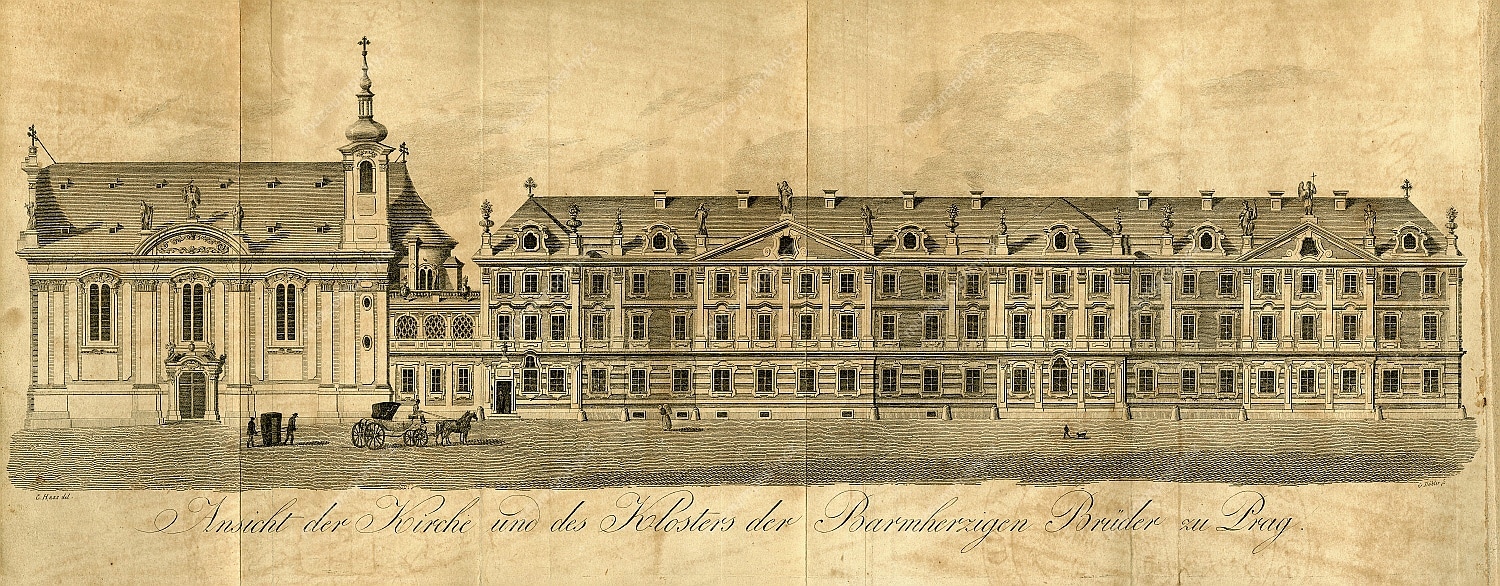
Jiří Döbler, 1823
The start of construction work on the original hospital and surrounding gardens marked a key milestone, as the hospital began to gradually expand and take on the form we know today.
Legend has it that wood from the execution site where 27 Czech nobles met their deaths was used in the hospital’s reconstruction. This wood, considered desecrated, reportedly lay on Old Town Square for many months without anyone wanting to take it. Eventually, it was used to create the structural elements of the hospital’s new design—roof trusses and beams—while the remaining wood was used to build one of the hospital’s staircases. However, the identity of this staircase and the truth of this legend remain shrouded in mystery to this day.
1621
The stairs from the execution site
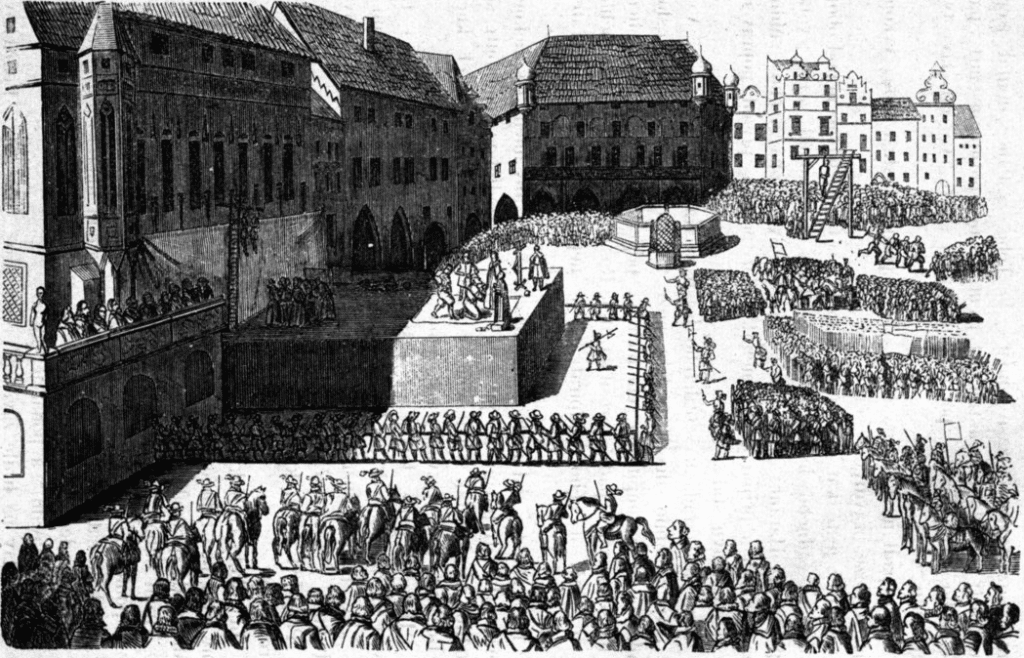
The Execution of the Czech Nobles in Old Town Square on June 21, 1621
Legend has it that wood from the execution site where 27 Czech nobles met their deaths was used in the hospital’s reconstruction. This wood, considered desecrated, reportedly lay on Old Town Square for many months without anyone wanting to take it. Eventually, it was used to create the structural elements of the hospital’s new design—roof trusses and beams—while the remaining wood was used to build one of the hospital’s staircases. However, the identity of this staircase and the truth of this legend remain shrouded in mystery to this day.
In 1624, a pharmacy open to the public was opened at the hospital
1624
Pharmacy
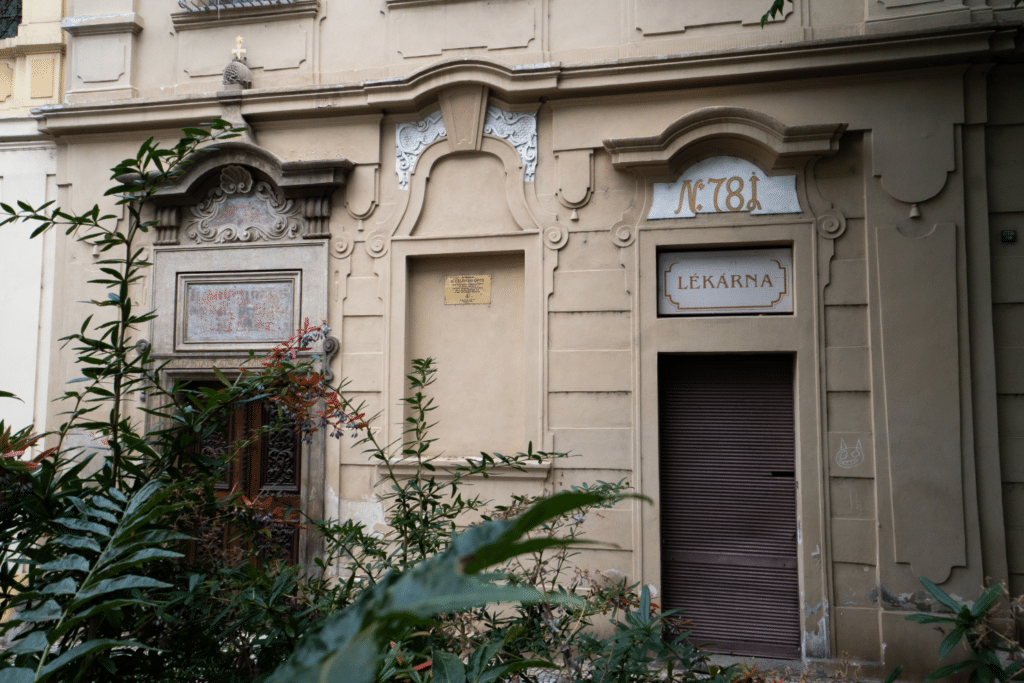
In 1624, a pharmacy open to the public was opened at the hospital
In 1632, a new church adjacent to the hospital complex was consecrated
1632
Church
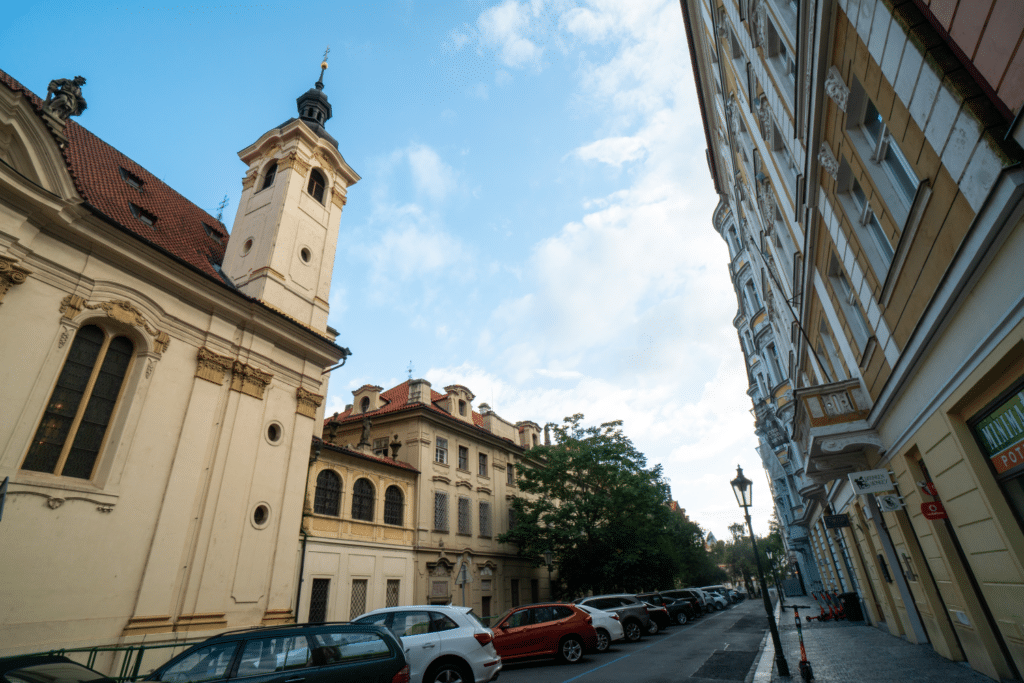
In 1632, a new church adjacent to the hospital complex was consecrated
The autopsy, which took place in 1685 at the Hospital of the Brothers of Mercy, demonstrated the progress that had been made in medical education at that time. The surgeon performed the autopsy, while a professor of medicine supervised the procedure and provided commentary for the medical students in attendance.
1685
Autopsy
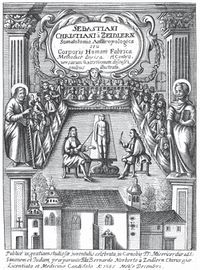
The autopsy, which took place in 1685 at the Hospital of the Brothers of Mercy, demonstrated the progress that had been made in medical education at that time. The surgeon performed the autopsy, while a professor of medicine supervised the procedure and provided commentary for the medical students in attendance.
Between 1751 and 1753, the front wing of the hospital was extended to take on the form we know today. From U Milosrdných Street, visitors can admire not only its architecture but also the gallery of statues on the roof of this two-story building.
1751–1753
Renovations to the front wing
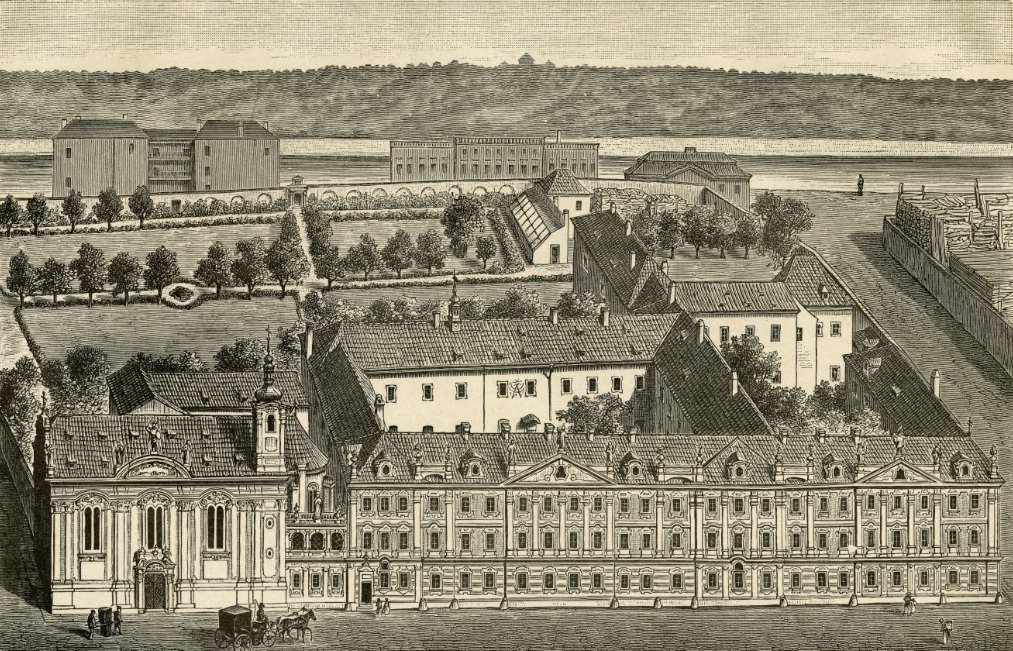
Between 1751 and 1753, the front wing of the hospital was extended to take on the form we know today. From U Milosrdných Street, visitors can admire not only its architecture but also the gallery of statues on the roof of this two-story building.
Jan Theobald Held is a prominent figure in the history of Czech medicine; he worked at the Hospital of the Brothers of Mercy for three decades, from the time of his graduation in July 1797 until 1827. During his tenure, he made a number of significant contributions, particularly during the typhoid epidemic of 1799–1803, when he played a key role in reducing mortality rates (compared to other medical facilities). During the Napoleonic Wars, when the hospital was facing financial difficulties, Held helped the hospital secure a financial donation from Count Kolovrat, which enabled it to continue operating.
1797–1827
Jan Theobald Held (b. 1770, d. 1851)

Jan Theobald Held is a prominent figure in the history of Czech medicine; he worked at the Hospital of the Brothers of Mercy for three decades, from the time of his graduation in July 1797 until 1827. During his tenure, he made a number of significant contributions, particularly during the typhoid epidemic of 1799–1803, when he played a key role in reducing mortality rates (compared to other medical facilities). During the Napoleonic Wars, when the hospital was facing financial difficulties, Held helped the hospital secure a financial donation from Count Kolovrat, which enabled it to continue operating.
On February 6, 1847, the first surgical procedure in Bohemia to use general anesthesia was performed at the Hospital of the Brothers of Mercy. The ether anesthesia was administered by Celestýn Opitz, a surgeon and member of the Order of the Brothers of Mercy. This discovery not only brought immense relief to patients, who were spared excruciating pain during surgical procedures, but also brought the hospital great renown.
February 6, 1847
First surgery under general anesthesia
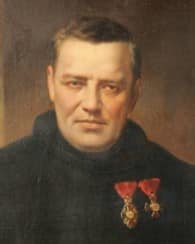
Br. Celestýn Opitz, M.D., OH (*1810, +1866)
On February 6, 1847, the first surgical procedure in Bohemia to use general anesthesia was performed at the Hospital of the Brothers of Mercy. The ether anesthesia was administered by Celestýn Opitz, a surgeon and member of the Order of the Brothers of Mercy. This discovery not only brought immense relief to patients, who were spared excruciating pain during surgical procedures, but also brought the hospital great renown.
At the beginning of the 20th century, the hospital underwent a major modernization. On the site of the demolished north wing, a successful and functional extension was built along the riverfront, which was very well equipped with modern medical devices (X-ray, sunlamp, diathermy, bath, steam, and electric baths, as well as a chemical and bacteriological laboratory). It also had specialized departments for internal medicine, surgery, ear and nose, eye, and infectious diseases.
1924–1926
Construction of the hospital's waterfront section
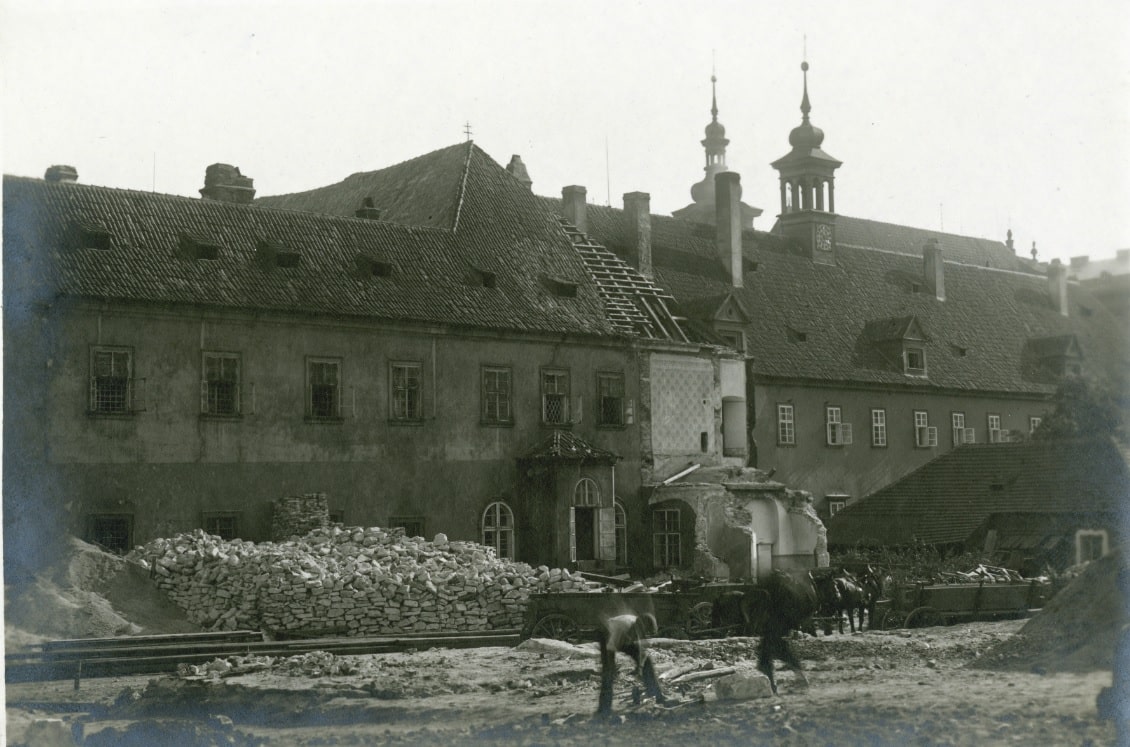
At the beginning of the 20th century, the hospital underwent a major modernization. On the site of the demolished north wing, a successful and functional extension was built along the riverfront, which was very well equipped with modern medical devices (X-ray, sunlamp, diathermy, bath, steam, and electric baths, as well as a chemical and bacteriological laboratory). It also had specialized departments for internal medicine, surgery, ear and nose, eye, and infectious diseases.
The hospital’s new main building was opened in 1927. Among those who contributed to its construction were Pope Pius XI, President T. G. Masaryk, and others. The extension was designed by two well-known interwar architects, V. Kvasnička and J. Mayer. The building is shaped like a horizontal E, with its central section serving as a link to the older structures. The architects ingeniously designed the operating rooms, located on the top floor of the building, whose panoramic windows offer beautiful views of the Vltava River, Letná, and Prague Castle. The hospital’s capacity increased to 200–280 beds.
October 9, 1927
Opening of a new wing of the hospital
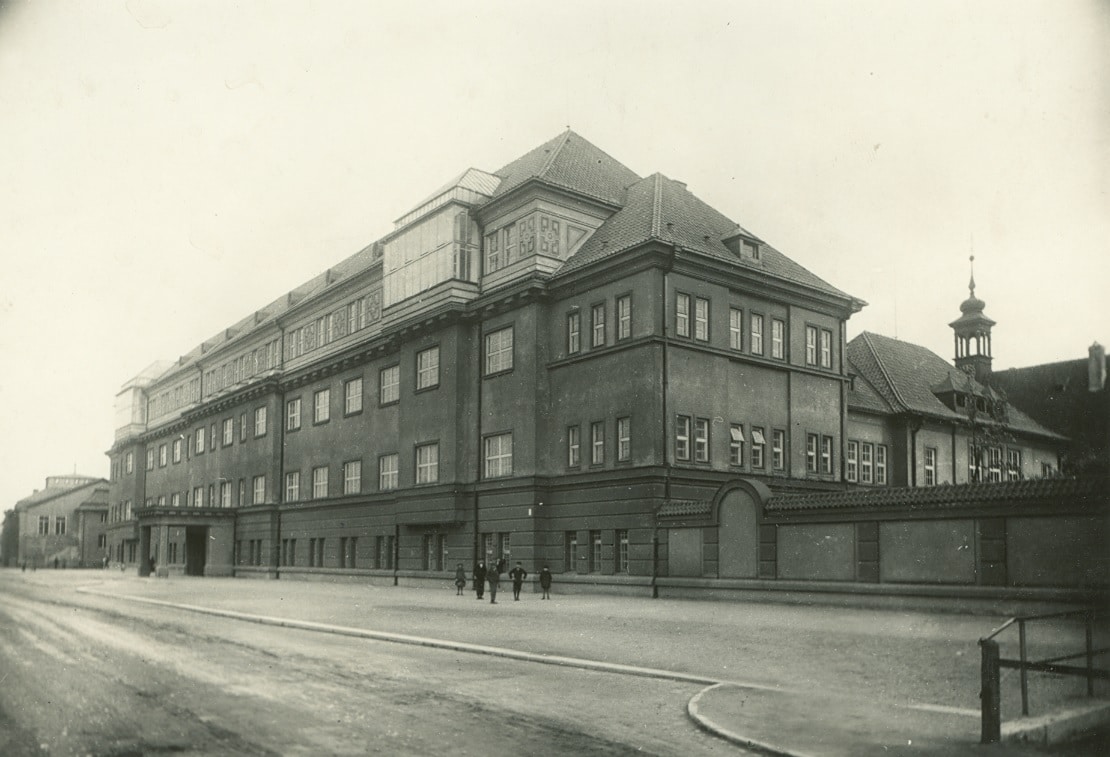
The hospital’s new main building was opened in 1927. Among those who contributed to its construction were Pope Pius XI, President T. G. Masaryk, and others. The extension was designed by two well-known interwar architects, V. Kvasnička and J. Mayer. The building is shaped like a horizontal E, with its central section serving as a link to the older structures. The architects ingeniously designed the operating rooms, located on the top floor of the building, whose panoramic windows offer beautiful views of the Vltava River, Letná, and Prague Castle. The hospital’s capacity increased to 200–280 beds.
During World War II, the occupying forces seized the hospital for the German army. The Luftwaffe took over the hospital and established a military hospital there. After liberation in 1945, the hospital returned to being a religious institution, but only until the communist coup in February 1948, when it was nationalized.
World War II
German Air Force Hospital
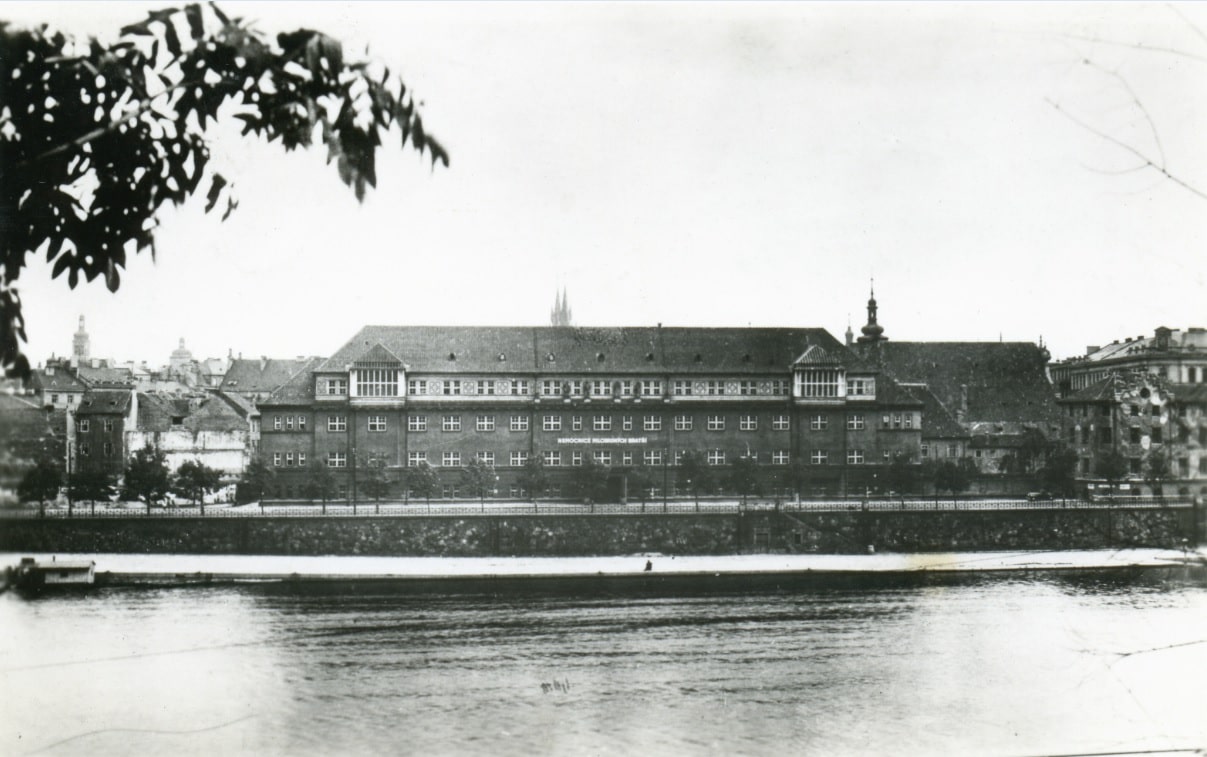
During World War II, the occupying forces seized the hospital for the German army. The Luftwaffe took over the hospital and established a military hospital there. After liberation in 1945, the hospital returned to being a religious institution, but only until the communist coup in February 1948, when it was nationalized.
In 1965, the first inpatient anesthesiology and intensive care unit (ICU) in Czechoslovakia was opened at Na Františku Hospital. This event represents a significant milestone in the history of Czech healthcare. The unit was designed with a modern approach and was fully equipped with state-of-the-art technology. Fourteen monitored beds with ventilators were available for patients, which represented a groundbreaking advancement in the care of critically ill patients at the time.
February 15, 1965
The First ARO in Czechoslovakia
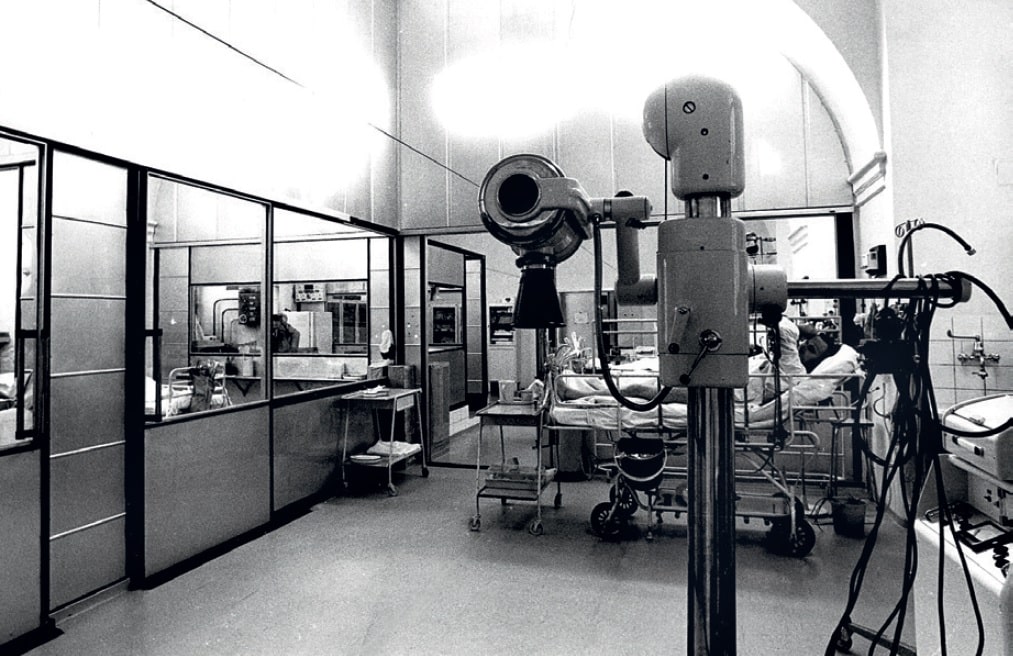
In 1965, the first inpatient anesthesiology and intensive care unit (ICU) in Czechoslovakia was opened at Na Františku Hospital. This event represents a significant milestone in the history of Czech healthcare. The unit was designed with a modern approach and was fully equipped with state-of-the-art technology. Fourteen monitored beds with ventilators were available for patients, which represented a groundbreaking advancement in the care of critically ill patients at the time.
The photographs are protected by copyright.
Source: Prague Museum archives, Library of the First Faculty of Medicine, Charles University, Order of the Brothers of Mercy, Assoc. Prof. Jarmila Drábková, MD, PhD, Na Františku Hospital