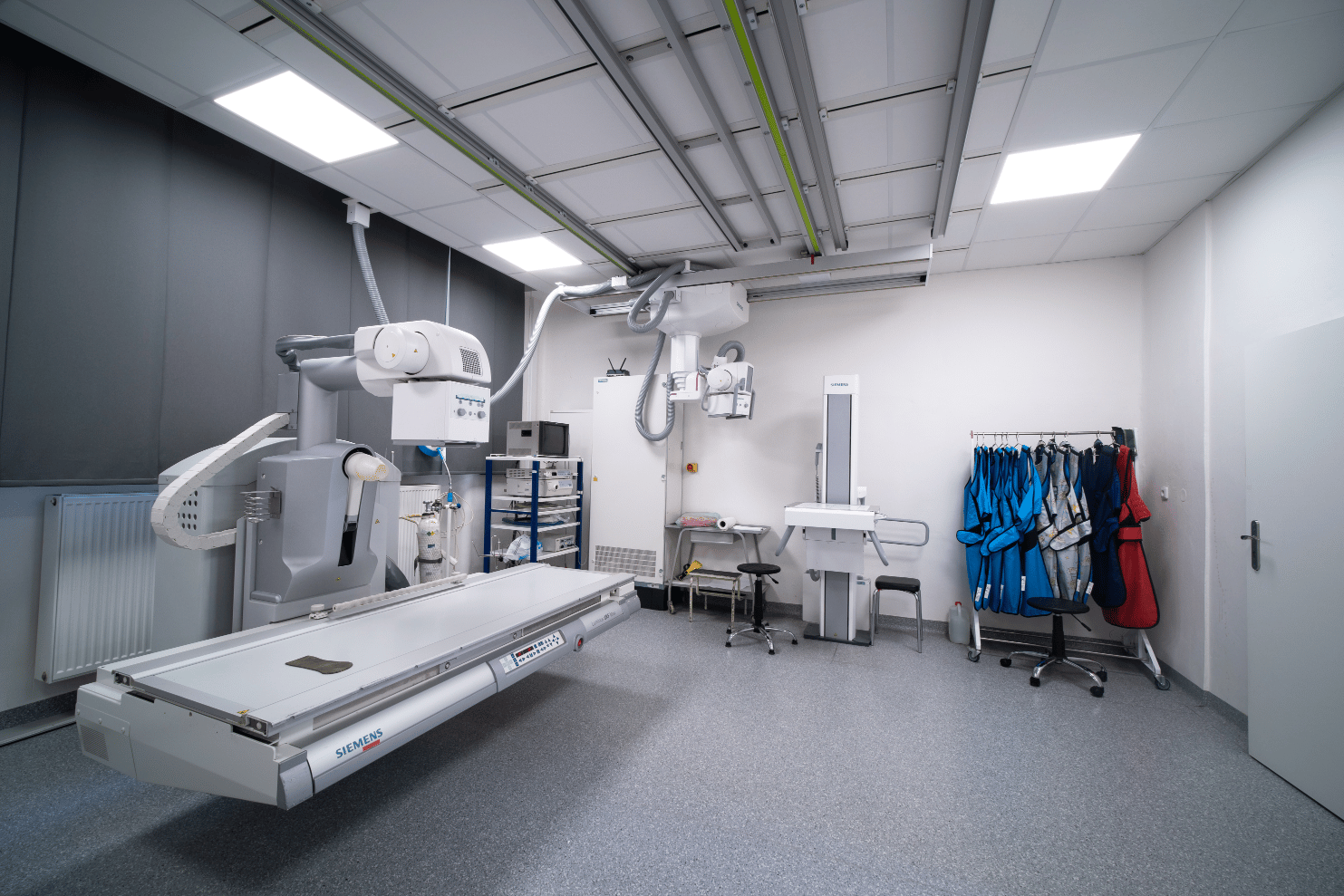
In our radiology department, we perform conventional radiographic examinations of the skeleton in various parts of the body and of certain organs (e.g., the chest, abdomen, and pelvis). We also perform fluoroscopic examinations of the digestive tract and intravenous urograms (IVU).
Routine skiagraphic X-ray examinations that do not require prior patient preparation are performed on a walk-in basis.Appointments are required for intravenous urograms (IVU) and skiascopic examinations of the gastrointestinal tract.
Range of examinations
Skiagraphy
This is a basic diagnostic method that uses X-rays to visualize various parts of the human skeleton (e.g., the upper and lower limbs, pelvis, chest, spine, etc.) as well as internal organs (e.g., the lungs). We perform these examinations on a walk-in basis.
Excretory Urography (IVU)
An IVU is an X-ray examination that uses an iodine-based contrast agent to visualize the kidneys, urinary tract, and bladder.
This examination cannot be performed in patients with an allergy to iodinated contrast agents or in patients with significant kidney dysfunction.
The examination process
The examination takes about 45 minutes, during which a series of at least four X-rays is taken; if necessary, a CT scan is also performed.
The patient lies on the examination table while the radiology technician performs the imaging. A contrast agent containing iodine is injected into a vein. During the injection, you may experience, for example, a sensation of warmth in your body, a dry mouth, or the urge to urinate. These symptoms will subside after a short while. The contrast agent is excreted from the body in the urine, so it is advisable to drink plenty of fluids after the exam.
Preparing for the exam
Eat a non-gas-producing diet for four days before the examination; do not restrict your fluid intake. Do not eat on the morning of the examination; drink an appropriate amount of water. If you have a known drug or other allergy, the referring physician will administer the antiallergic medication Prednisone 40 mg (2 tablets) the evening before the examination and 20 mg (1 tablet) in the morning. Patients with diabetes must stop taking antidiabetic medications containing the active ingredient metformin (Glucophage, Siofor, Metformin-Teva, Diareg, Stadamet, Vipdomet, Jentadueta) two days in advance.
Fluoroscopic examination – swallowing process, passage through the esophagus, stomach, and duodenum
This is an examination that uses a contrast agent to visualize the digestive tract. A barium contrast agent is typically used; however, if a digestive tract injury is suspected, an aqueous iodine contrast agent is used.
The examination process
A swallowing test takes about 20 minutes, while a transit study can take up to several hours, during which the patient returns at specific intervals so that X-rays can be taken to monitor the passage of the contrast dye through the digestive tract.
Preparing for the exam
For four days before the exam, eat a diet that does not cause bloating; do not restrict your fluid intake. On the morning of the exam, do not eat or drink anything.
Gallery